To Introspect, First Must be Introspection
Friedrich Neitzsche's prologue of The Genealogy of Morals is about the fact that humans do not take enough time to introspect and get to know the self. In the text Neitzsche says, "We are always busy with our knowledge, as if we
were born winged creatures—collectors of intellectual honey,"(Neitzsche 1). This was just a very complicated way to say we are busy as bees, but with a slight twist that the philosopher says that we are too busy with our knowledge. This becomes an even greater truth every year as information is more and more available.
After reading The Genealogy of Morals, one truth became evident, that to introspect, first must be introspection. Knowledge from introspection is very complicated and must be known both a priori and a posteriori. The first step to cure a bad habit is to admit that the problem is there. Why would this not apply to not knowing yourself? How could you find yourself without saying that yourself is not known? The answer is you can't, if the self society wants is yourself, then you do not know yourself. The swarms of knowledge from our bee like lifestyles blocks the treasure from us.
Friday, May 9, 2014


Saturday, May 3, 2014
All Clovers are Family

People like to say that finding a four leaf clover is lucky, but all clovers are aesthetically pleasing. The heart shaped leafs joined to together is a family. A family held together by their love for each, but the fragile part of a family is also represented. The green leaves can easily be torn off and apart. No single leaf in the clover is any more important than another, they all have the same shape and size. The markings may be different, but so are the people of a family, and yet all together they have the same importance.
The natural green from nature is home, and where is home? Home is where the heart shaped leaf of a clover family is. The color green of clovers, grass, leaves, and nature is home. Being out in the green home we call Earth is a very calming experience, without the magical color there would be no transcendentalists.
Dear Diary,
Today as I look back on my life, during my last moments, the mistake I made has finally appear the truth to to me. My monsters have suppressed my genius for my entire life, everything that has come to me as knowledge, gone, everything I came to know through reason, in dust, everything that I perceived and wonder why, pried for my own hands and thrown in the trash. These monsters are like a curtain draped over me that does not light my light shine through, they told and taught me how to think, but in reality they shoved inside the box with no breathing room. My own ideas and conviction stuck within the confines of my own mind, a voice deep inside of me, tells to let them out, but the monsters make me not let my genius gleaming light prevail. I could have done so much but my monsters guarded the prison cell I was stuck in.
My monsters started when I was just a child. They etched knowledge into my head, and the monsters gave me all the tools to think, and to formulate ideas and conviction, but they never let the my light shine. Whenever I shone my brilliant unique gleaming streak of blinding light, I was put out quickly by the same people who gave the ability think. My knowledge that came to me both a priori and a posteriori, was rejected by the monsters and myself.
I had great ideas to revolutionize the way are cities functioned, making everyone’s life much better. More wildlife would be left untouched, traffic would never be a problem, the aesthetics would be pleasing. Then the mistake I came to know though deep introspection came into play, I blocked my own gleaming light. The gleam that can never be shut off be, but can be blocked. I see the bright dancing gleaming light as a flashlight that is always on with no off switch, so you cannot turn the light off, but the monsters and myself could still put a hand over the spewing creativity. Now that I’m almost gone I beg all others to hold your gleam flashlight close and guard your uniqueness with your life. To quote Ralph Waldo Emerson, “Imitation is suicide.”

Wednesday, April 16, 2014
The Mystery Solved by Mystery
 1.“An eye is meant to see things.
2. The soul is here for its own joy.
3. A head has one use: For loving a true love.
4. Feet: To chase after.
5. Love is for vanishing into the sky. The mind,
6. for learning what men have done and tried to do.
7. Mysteries are not to be solved: The eye goes blind
8. when it only wants to see why.
9. A lover is always accused of something.
10. But when he finds his love, whatever was lost
11. in the looking comes back completely changed.”
A line that stands out to me, is when Rumi says, "Mysteries are not to be solved: The eye goes blind / when it only wants to see why." First to dive into "Night and Sleep" you have background on Rumi. The Muslim poet practiced Sufism, in which the follower would give up worldly attachments to be closer to Allah, he also was the founder of Whirling Dervishes. The poet lived in 13th century Persia. Now that Rumi's para dime is set the line can be dissected.
The definition of mystery plays a huge role in the meaning of the line. Rumi is using the word mystery in a religious sense, as the rest of the poem is very Islamic. When he writes "why" Rumi is talking about religious truths that men are not supposed to know. The poet is saying Muslims should not try to seek out the mysteries, or else their faith will not be the same. The devotion to Allah will suffer as a result.
The definition of mystery plays a huge role in the meaning of the line. Rumi is using the word mystery in a religious sense, as the rest of the poem is very Islamic. When he writes "why" Rumi is talking about religious truths that men are not supposed to know. The poet is saying Muslims should not try to seek out the mysteries, or else their faith will not be the same. The devotion to Allah will suffer as a result.
Friday, March 14, 2014
 Othello the Gullible
Othello is the Moor general of the army, he is also the husband of Desdemona and the boss of Micheal Cassio and Iago. Othello is in the middle of Iago's grand scheme.
When Othello hears of t Iago's tale of Micheal Cassio and Desdemona's affair, the general fires Micheal Cassio and moves Iago the flag bearer up to Cassio's position of Lieutenant.

Othello then goes on to give his wife the cold shoulder, disregarding her completely. He loses all the trust had with his wife.
Othello is a real fool for not figuring out that Iago is a squirrel man. He did not believe the word of his own wife and his right hand man making him the villain.

Friday, February 28, 2014
Michael Cassio, the Lone Gentleman
Michael Cassio is a gentleman. The only known of his kind in Othello. Iago tries to make Othello believe that Desdemona and Michael Cassio are having an affair, and Othello wants no part of this. Micheal Cassio also holds Iago's dream job, lieutenant.
 Michael Cassio's kissing of other's wives was once actually the polite thing to do, unlike now where Cassio would have started a fight. This is the biggest act of being a gentleman so far in Othello. Michael Cassio is the gentleman.
Iago decides to stir up trouble and make Othello believe that Michael Cassio and Desdemona are lovers. Cassio's nature of being a gentleman backfires on him, others see him kiss Desdemona and this adds plenty of fuel to the fire to make Othello believe that the affair is really going on.
The lieutenant of Othello's army is Michael Cassio, Iago deeply desires this job and he wants to get out of being the flag bearer. Iago gets very jealous of Michael Cassio's job and fuels his desire to bring down Cassio.
Michael Cassio is a gentleman. The only known of his kind in Othello. Iago tries to make Othello believe that Desdemona and Michael Cassio are having an affair, and Othello wants no part of this. Micheal Cassio also holds Iago's dream job, lieutenant.

 Michael Cassio's kissing of other's wives was once actually the polite thing to do, unlike now where Cassio would have started a fight. This is the biggest act of being a gentleman so far in Othello. Michael Cassio is the gentleman.
Iago decides to stir up trouble and make Othello believe that Michael Cassio and Desdemona are lovers. Cassio's nature of being a gentleman backfires on him, others see him kiss Desdemona and this adds plenty of fuel to the fire to make Othello believe that the affair is really going on.

The lieutenant of Othello's army is Michael Cassio, Iago deeply desires this job and he wants to get out of being the flag bearer. Iago gets very jealous of Michael Cassio's job and fuels his desire to bring down Cassio.

Friday, February 21, 2014
Desdemona, the Traitor, the Lover
In the Shakespeare play "Othello" Desdemona is the daughter of Brabantio, and she is the wife of the general and the Moor, Othello. Desdemona betrayed her family by marrying the Moor, according to her father. Desdemona is also loved by Roderigo, who almost killed himself over not being able to have Desdemona.

Desdemona is a strong woman, she married the man she loved without her father's approval, showing her tremendous courage. She also chooses to go off to war in order to be with her husband, Othello. The most significant act by her so far is standing up to Iago. No one had stood up to Iago before, but Desdemona had the courage to defend Emilia and many other women.
Iago was degraded his wife Emilia right in front of her eyes. Iago sets a very low bar for being a gentleman, but this is the lowest he has gone. Not only does Iago bring down his wife he starts to bring down all women. This is when Desdemona steps in and finally says no to Iago. Desdemona stop the bully for the day, but now Desdemona has a giant target on his her back, and Iago has a bow and many arrows.
In the Shakespeare play "Othello" Desdemona is the daughter of Brabantio, and she is the wife of the general and the Moor, Othello. Desdemona betrayed her family by marrying the Moor, according to her father. Desdemona is also loved by Roderigo, who almost killed himself over not being able to have Desdemona.


Desdemona is a strong woman, she married the man she loved without her father's approval, showing her tremendous courage. She also chooses to go off to war in order to be with her husband, Othello. The most significant act by her so far is standing up to Iago. No one had stood up to Iago before, but Desdemona had the courage to defend Emilia and many other women.
Iago was degraded his wife Emilia right in front of her eyes. Iago sets a very low bar for being a gentleman, but this is the lowest he has gone. Not only does Iago bring down his wife he starts to bring down all women. This is when Desdemona steps in and finally says no to Iago. Desdemona stop the bully for the day, but now Desdemona has a giant target on his her back, and Iago has a bow and many arrows.


Friday, February 7, 2014
Iago the King of Gossip
 In the Shakespeare play, "Othello," Iago is the slimy squirrel of a man. If the brutal mistake of trusting Iago is made, multiple back stabs will occur on his behalf. The squirrel man has no problem throwing insults at others to getting his devious way. There is another point in having Iago in the story he is the foil of the man character, Othello.
During Act 1 of "Othello," Iago told Brabantio, that Brabantio's daughter had married Othello, the Moor. Then Iago went off and told Othello that, Brabantio was coming for his daughter, and the he was, loyal to Othello. Iago a man who is slimy and will start trouble behind your back. When someone decides to trust Iago they are in for a wild ride.
Iago and Othello are two very different people, they are foils, or characters who are opposite of another character. Iago slimy squirrel like self brings out the trustworthiness in Othello do to comparison. The effects of a foil work the other way around as well.
Iago is the untrustworthy, slimy squirrel man who is the foil of the great Othello.

Friday, November 29, 2013
The Book Thief, Book Four, The Standover Man
The Man who Needs an Accordion

The son of Hans Huberman's old friend from World War II, or at the time the Great War, comes to visit the accordionist at his house. Hans is very fortunate for having Erik Vanderburg at his side because he keep him out of battle the day when if Hans did he would die. Erik Vanderburg and his family were Jewish, the son, Max needed somebody to hide him from the Nazis and he finds the Hubermans.
A History of Max
Max Vanderburg liked to fight at the local playground, his first fight was against Wenzel Gruber. Max also came from a family that was very poor and went broke. Hans Huberman managed to get the fighter to his house so he could hide.
Max and Liesel
Max and Liesel have a special relationship with each other, as both have families who are dead or in a concentration camp. Also they both have a nightmare almost every night, like to fight, and have came to the Hubermans for safety. Max made a short story for Liesel about how Max feels about other people and his feelings about Liesel.
The Man who Needs an Accordion

The son of Hans Huberman's old friend from World War II, or at the time the Great War, comes to visit the accordionist at his house. Hans is very fortunate for having Erik Vanderburg at his side because he keep him out of battle the day when if Hans did he would die. Erik Vanderburg and his family were Jewish, the son, Max needed somebody to hide him from the Nazis and he finds the Hubermans.
A History of Max
Max Vanderburg liked to fight at the local playground, his first fight was against Wenzel Gruber. Max also came from a family that was very poor and went broke. Hans Huberman managed to get the fighter to his house so he could hide.

Max and Liesel
Max and Liesel have a special relationship with each other, as both have families who are dead or in a concentration camp. Also they both have a nightmare almost every night, like to fight, and have came to the Hubermans for safety. Max made a short story for Liesel about how Max feels about other people and his feelings about Liesel.

Friday, November 22, 2013
The Book Thief: Book Two and Three,
 The Thief Strikes
More Books for the Thief
Liesel stole the book The Shoulder Shrug from a German book burning of books that had ideas, characters, or themes that Hitler didn't agree with. The thief stole a book from a pile of books that had ideas that Hitler didn't support giving her the power to rise over Nazi propaganda.
Hans Huberman also got Liesel two books for Christmas, the proud papa gave his daughter the books from a trade with a gypsy for some of Hans' prized hand rolled cigarettes. The two books didn't have not approved of messages like The Shoulder Shrug, but they were still books and Liesel loved to read.
Letters to Mama
In a project for school Liesel must write a letter, she then decides to make a letter to her birth mother. Liesel then takes money from her house cleaning jobs to pay the postage. Sadly, she will never be written back to because mama is in a concentration camp, in Nazi Germany and possibly dead.
The Horrid Celebration
The day is April 20, the wicked ones birthday, Germans celebrate in the streets of Molching. Citizens say their Heil Hitlers and support the Nazi cause or at least pretend to. Some people including Hans Huberman only go because if they didn't they might be off to a living cementery, just like Liesel's mother. This is where Liesel stole the book. Her father found out about the incident, Hans was fine with the thievery as loong as she would stop, because he didn't want his daughter in danger.
The Mayor's Library
Liesel has a house cleaning job at the mayor of Molching's house, while there the thief takes a book from their house on the floor, but the mayor's wife saw Liesel. The woman let Liesel go and actually read books from the mayor's libary, the wife was just waiting for a time to strike.

 The Real Struggle
Max Vandenburg was a Jew hiding in a small dark room from Hitler, with very little food. Hans Huberman finds the man, Max pleads for help, and Hans helps. Hans gets a copy of Mein Kampf My Struggle by Adolf Hilter, for Max Vandenburg, they use this to make the look like a Nazi, that way he can get on a train to Molching. At Molching Hans can help Max everyday.
Figurative Language of the Book Thief
or should I say
The Book Thief of Figurative Language
Figurative language is scattered throughout the Book Thief. The figurative language that Markus Zusak uses adds another layer to the greatness and the confusion in this fantastic book. In the book Zusak gives colors connotations that have meaning in the Holocaust. An example is from the color red used in chapter: The Flag red can mean danger, but the color also signifies the holocaust.
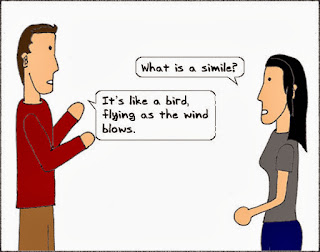
Simile
"Red marks like footprints, and they burned" (Zusak 99).
This is an example of a simile because the words compare how the marks from the Watschen were like footprints, and how they started deep but faded away. Another reason why this is a simile is because the comparison used like, for a simile as can be used instead of like.
Metaphor
"His self-respect was around his ankles" (Zusak 413).
The boys self-respect was very low just like your ankles are to ground. Zusak compared self-respect to ankles without using like or as making this a metaphor.
Personification
"The playground demanded that they fight, and neither boy was about to argue" (Zusak 187).
This beautiful, gorgeous piece of writing here is an excellent piece of personification. Personification is when you give human qualities to an inanimate object or idea, this is displayed because obviously playgrounds can not demand things.
Oxymoron
"If they killed him tonight, at least he would die alive" (Zusak 168).
Being alive and being dead are two opposite concepts making this a great example of an oxymoron.
Metonymy
"'Pass auf, Kind,' a uniform said to her at one point" (Zusak 119).
This is a an example of metonymy because uniforms is used instead of Nazis.

or should I say
The Book Thief of Figurative Language
Figurative language is scattered throughout the Book Thief. The figurative language that Markus Zusak uses adds another layer to the greatness and the confusion in this fantastic book. In the book Zusak gives colors connotations that have meaning in the Holocaust. An example is from the color red used in chapter: The Flag red can mean danger, but the color also signifies the holocaust.

Simile
"Red marks like footprints, and they burned" (Zusak 99).

This is an example of a simile because the words compare how the marks from the Watschen were like footprints, and how they started deep but faded away. Another reason why this is a simile is because the comparison used like, for a simile as can be used instead of like.

Metaphor
"His self-respect was around his ankles" (Zusak 413).
The boys self-respect was very low just like your ankles are to ground. Zusak compared self-respect to ankles without using like or as making this a metaphor.
Personification
"The playground demanded that they fight, and neither boy was about to argue" (Zusak 187).
This beautiful, gorgeous piece of writing here is an excellent piece of personification. Personification is when you give human qualities to an inanimate object or idea, this is displayed because obviously playgrounds can not demand things.
Oxymoron
"If they killed him tonight, at least he would die alive" (Zusak 168).
Being alive and being dead are two opposite concepts making this a great example of an oxymoron.
Metonymy
"'Pass auf, Kind,' a uniform said to her at one point" (Zusak 119).
This is a an example of metonymy because uniforms is used instead of Nazis.

Thursday, November 14, 2013
 The Book Thief: Book One, the First Book
The Book Thief is a piece of Holocaust literature by Markus Zusak, and a great one at that.

During book one, Liesel Meminger, or better known to our narrator, Death, as the the Book Thief. Liesel and her brother were given to foster parents by their mother, but on the train ride towards Munich, Germany, her brother dies. The brother has a funeral where Liesel takes a book the one of grave diggers drops, and she takes the book even though she can't read. When Liesel gets to her foster parents house in a poor part of a town called Molching. The street she lives on is named Himmel Street, which is very ironic because himmel is German for heaven, and Zusak says "The buildings appear to be glued together, mostly small houses and aprtment blocks that look nervous. There is murkey snow spread out like carpet. There is concrete, empty hat-stand trees, and gray air"(27). Not a heaven like picture at all. Her foster mother is Rosa Huberman is a foul mouthed woman, Liesel's Father Hans Huberman is a accordian playing, painter.
On Himmel Street Liesel meets Rudy Steiner a scawny kid with German blonde hair and safe blue eyes, but even though Rudy sounds like he can stay alive during the Holocaust because of his appearance he might have a tough time. Rudy seems very tolerate of other races he shows this in the Jesse Owens incident.
Where Zusak writes, "In which he painted himself charcoal black and ran the 100 meters at the local playing field one night" (48).


Liesel also has a thirst to read and therefore a thirst of knowledge.
Thursday, October 3, 2013
Wind the Power of the Storm
Wind map right now
 Wind can shape our world, erode the mountains and sand dunes. The wind can destroy houses and take down power lines. This force of nature is amazing, but how does wind form?
Wind occurs when heavier cooling air descends on warm air pushing the warm air out of the way and making wind.

The Coriolis Effect makes long distance winds curve, this happens because of the Earth's rotation from east to west. Winds that go north to south would curve to the east, with the Earth's rotation.
Wind is made into power by having blades that are connected to a motor. The blades turn and slow down the wind, the turning of blades turns the power generating motor. There is a maximum to the amount of wind turned into energy explain by physicist Albert Betz, in his theory the Betz Limit.
Sunday, September 15, 2013
A Whole New Mind
Graham Crackers Can Blog
A Whole New Mind
That the the useless right hemisphere of your brain is just as important as the once thought superior left hemisphere.

Studies of the right and left brain show that the left brain is analytic, while the right brain is creative. The left brain handles language, science, logic and more. The forgotten right brain handles emotions, creativity, and more. The author of A Whole New Mind, Daniel Pink, explains in the paragraph "Right Brain Rising" that the right hemisphere is just as important as the left hemisphere.
Imagine having a stroke and only be able to use one hemisphere of your brain. This happened to neuroscienctist Jill Bolte Taylor, during her stroke she could only use the right hemisphere of her brain. Making Doctor Taylor look at the world through a different perspective. She was not able to to speak because she lost use of the left side of her brain.
 "Creativity is intelligence having fun."
-Albert Einstein
“Imagination is more important than knowledge. Knowledge is limited. Imagination encircles the world.”
-Albert Einstein

Thursday, September 5, 2013

GrahamCrackers can Blog
How can the human mind work at its most efficient, prime, and outstanding state? According to the author of Discovering and Exploring Habits of Mind, Arthur L. Costa and Bena Kallick, there are certain habits that can help accomplish that.
- Persisting- According to the text people who persist “Have a repertoire and employ a range of alternative approaches.” The authors also say, “If one strategy doesn't work, they know how to back and try another.”
- Thinking Flexibly- In the text one of the important features to thinking flexibly is, “Trusting their subconscious to continue creative and productive work of on it.”


Another problem in the actual text was every entry started with good problems, this seemed very redundant.

Another book that I read, I Am the Messenger by Markus Zusak had a main character with these qualities. The main character, Ed, was an average guy, he had to dig deep and use these habits of the mind to solve other peoples problems along with his own.
Subscribe to:
Posts (Atom)